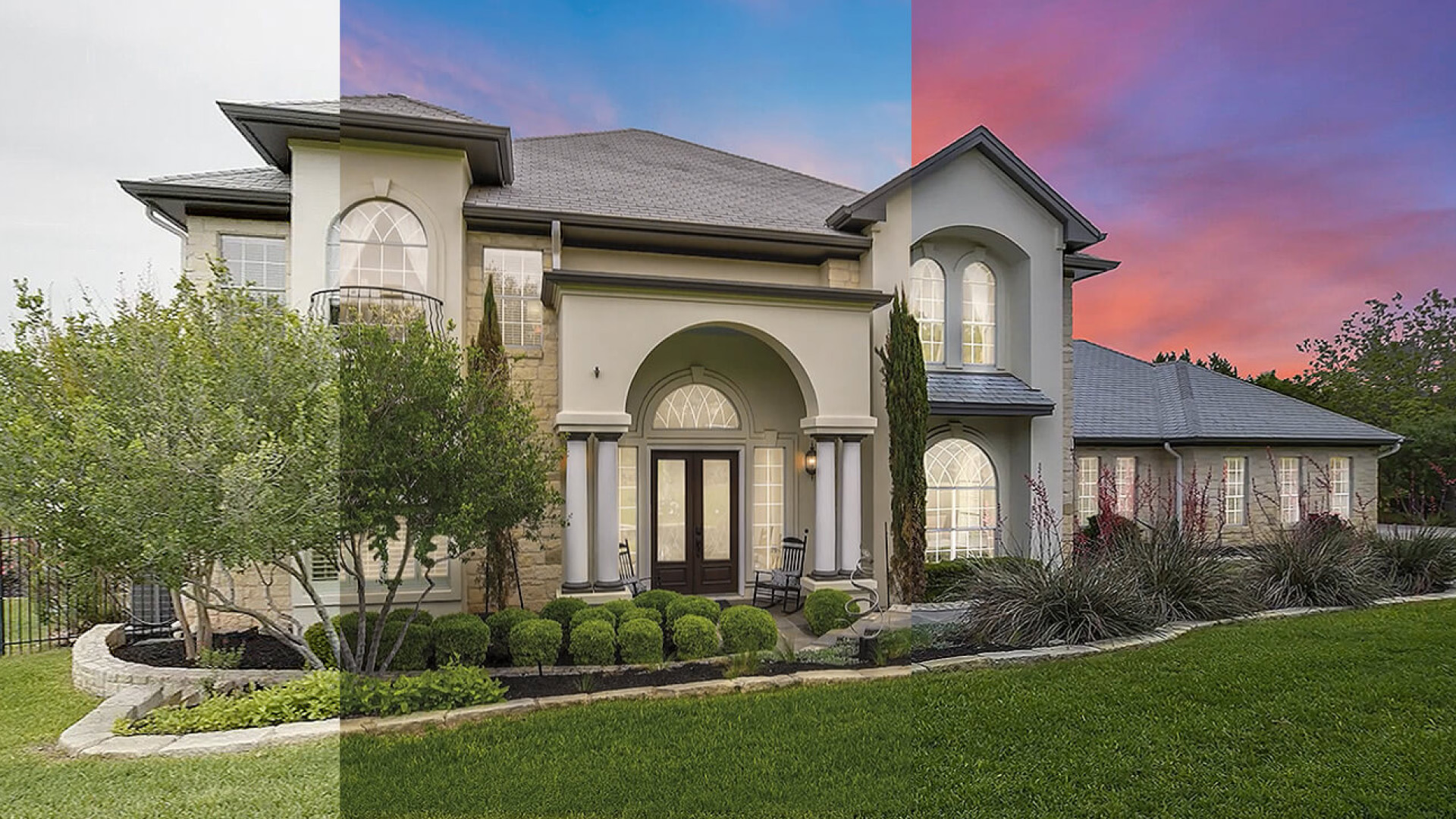
Are you curious about the future of virtual staging and how artificial intelligence (AI) is set to revolutionize the process? As technology continues to advance at an extraordinary pace, virtual staging has evolved from a niche novelty into an essential marketing tool for real estate professionals worldwide. With AI virtual staging, the process is becoming faster, more accurate, and more personalized than ever before, providing agents and buyers with immersive experiences that were unimaginable just a few years ago.
In this guide, we will explore the current state of virtual staging, examine how AI is transforming every aspect of the process, and look ahead at the technologies that will shape the industry in the years to come.
What Is Virtual Staging?
Virtual staging is a process that uses computer-generated imagery to digitally furnish and decorate empty or outdated rooms. Instead of physically moving furniture into a property for photos, designers use specialized software to add realistic sofas, beds, dining sets, artwork, rugs, and lighting to high-resolution photographs of each room.
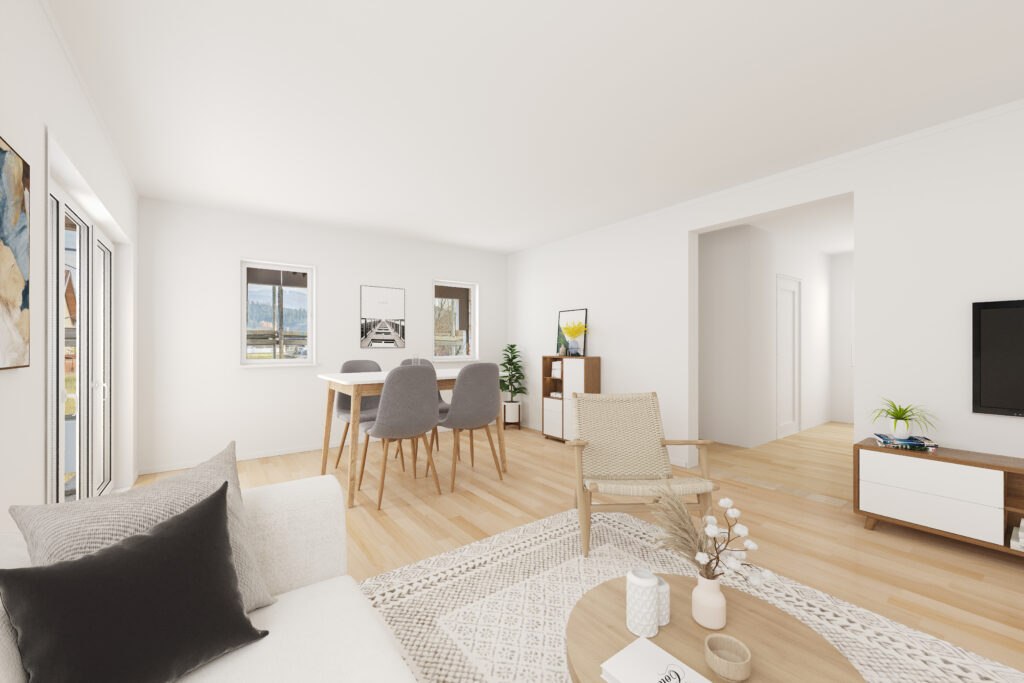
Virtual staging offers a compelling alternative to traditional staging. It eliminates the costs of furniture rental, delivery, and setup while producing images that can be ready in as little as 24 to 48 hours. For real estate professionals selling vacant homes, investment properties, or new constructions, virtual staging has become the go-to method for presenting listings in their best possible light.
How AI Is Changing Virtual Staging Today
The most significant shifts in virtual staging are happening right now, driven by advances in artificial intelligence. Here are the key ways AI is already transforming the industry.
Intelligent Room Analysis
Modern AI algorithms can analyze a room photograph and automatically identify its dimensions, architectural features, lighting conditions, and even the style of existing finishes. This analysis allows the software to suggest optimal furniture placement, appropriate piece sizes, and design styles that complement the space.
Rather than relying on a designer's subjective judgment alone, AI provides a data-driven foundation that helps staging teams make smarter decisions. The result is staging that feels proportional, intentional, and naturally suited to each property.
Automated Style Matching
AI-powered staging tools can recognize architectural cues such as crown molding, exposed brick, modern window frames, or farmhouse beams and then recommend decor styles that match. A Mediterranean-style home receives furnishings with warm tones and textured fabrics, while a sleek urban loft gets minimal, contemporary pieces.
This automated style matching saves considerable time in the design process and ensures that staging decisions are always aligned with the property's character rather than applied generically across every listing.
Faster Turnaround Times
Traditional virtual staging requires skilled designers to manually place, scale, light, and render each furniture piece. This process typically takes one to three days per image. AI-assisted tools can automate many of these steps, reducing turnaround times significantly.
Some AI platforms can generate initial staging concepts in minutes, which human designers then refine and perfect. This hybrid approach combines the speed of automation with the creative judgment of experienced staging professionals, delivering faster results without sacrificing quality.
Dynamic Personalization
One of the most exciting applications of AI in virtual staging is the ability to create multiple staging versions of the same room, each tailored to a different buyer demographic. A single room can be staged as a modern minimalist space for young professionals, a warm family-friendly environment for suburban buyers, or a luxury retreat for high-end clients.
AI makes this kind of dynamic personalization feasible at scale. Rather than producing one staging option per room, agents can offer several variations that speak directly to the preferences of their target audience.
The Technologies Shaping the Future
While current AI capabilities are already impressive, several emerging technologies promise to take virtual staging even further in the coming years.
3D Scanning and Photogrammetry
Advances in 3D scanning technology allow real estate professionals to create highly accurate digital models of properties using nothing more than a smartphone or a dedicated 3D camera. These scans capture precise room dimensions, surface textures, and spatial relationships.
When combined with AI virtual staging, 3D scans enable staging that is geometrically perfect. Furniture placement accounts for exact room measurements, ensuring that pieces fit naturally within the space and that proportions are always accurate.
Virtual Reality Walkthroughs
3D tours of a property represent one of the most transformative developments in real estate marketing. These tours allow potential buyers to navigate through a property as if they were physically present, exploring each room from multiple angles and perspectives.
When virtual staging is integrated into these VR experiences, buyers can walk through a fully furnished home from the comfort of their own living room. This level of immersion creates a dramatically more emotional and memorable viewing experience than static photographs alone.
Generative AI and Neural Rendering
Generative AI models are rapidly advancing their ability to produce photorealistic interior scenes. These systems can generate entirely new staging designs based on text descriptions, mood boards, or style references. Instead of selecting from a fixed furniture library, future staging tools may allow designers to describe a vision in natural language and have AI generate a custom staging scene from scratch.
Neural rendering techniques are also improving the realism of AI-generated images. Reflections, shadows, ambient lighting, and material textures are becoming increasingly indistinguishable from real photographs, further blurring the line between virtual and physical staging.
Augmented Reality for In-Person Viewings
Augmented reality (AR) brings virtual staging into the physical world. Using a smartphone or AR glasses, buyers touring an empty property can see digitally staged furniture overlaid onto the real space in real time. They can walk around virtual sofas, view staged rooms from different angles, and even swap between different design styles on the spot.
AR staging bridges the gap between the convenience of virtual staging and the tangible experience of traditional physical staging. As AR technology improves, this hybrid approach will likely become a standard feature of property showings.
The Benefits of AI Virtual Staging for Real Estate
The convergence of AI and virtual staging delivers clear benefits across the real estate transaction process.
Cost Savings. Virtual staging typically costs a fraction of traditional staging. AI automation further reduces costs by streamlining the design process and reducing the number of design hours required per project.
Speed to Market. Properties can be staged and listed faster, which is critical in competitive markets where days on market directly affect sale prices. AI-assisted tools accelerate production without compromising quality.
Scalability. AI makes it practical to stage entire developments, large portfolios, or high-volume listings that would be prohibitively expensive to stage physically. Whether staging one unit or one hundred, the process remains efficient and consistent.
Buyer Engagement. Professionally staged listings consistently receive more online views, longer viewing times, and higher engagement rates than unstaged properties. AI-enhanced staging pushes the quality ceiling even higher, making listings more compelling to increasingly discerning digital-first buyers.
Flexibility. Virtual staging allows agents to restage a property digitally if the target market shifts, if initial images are not producing results, or if the property needs to appeal to a different demographic. Changes that would require physically moving furniture can be accomplished in hours.
What This Means for Real Estate Professionals
The future of virtual staging is not about replacing human creativity. It is about augmenting it. AI handles the time-consuming, repetitive aspects of staging design, freeing experienced professionals to focus on creative direction, client communication, and strategic marketing decisions.
Real estate professionals who embrace AI-powered staging tools will gain a significant competitive advantage. They will be able to market properties faster, tailor presentations to specific buyer groups, and deliver a level of visual quality that sets their listings apart in crowded online marketplaces.
Conclusion
Virtual staging is an essential tool for real estate professionals who want to showcase properties in the best possible light. With the latest advancements in technology and AI, virtual staging is poised to fundamentally reshape how we stage homes and market real estate.
From intelligent room analysis and automated style matching to VR walkthroughs and generative AI, the tools available to staging professionals are becoming more powerful every year. The key is to stay informed, adopt these technologies strategically, and combine the efficiency of AI with the irreplaceable value of human design expertise. The future of virtual staging has arrived, and it is more exciting than ever.