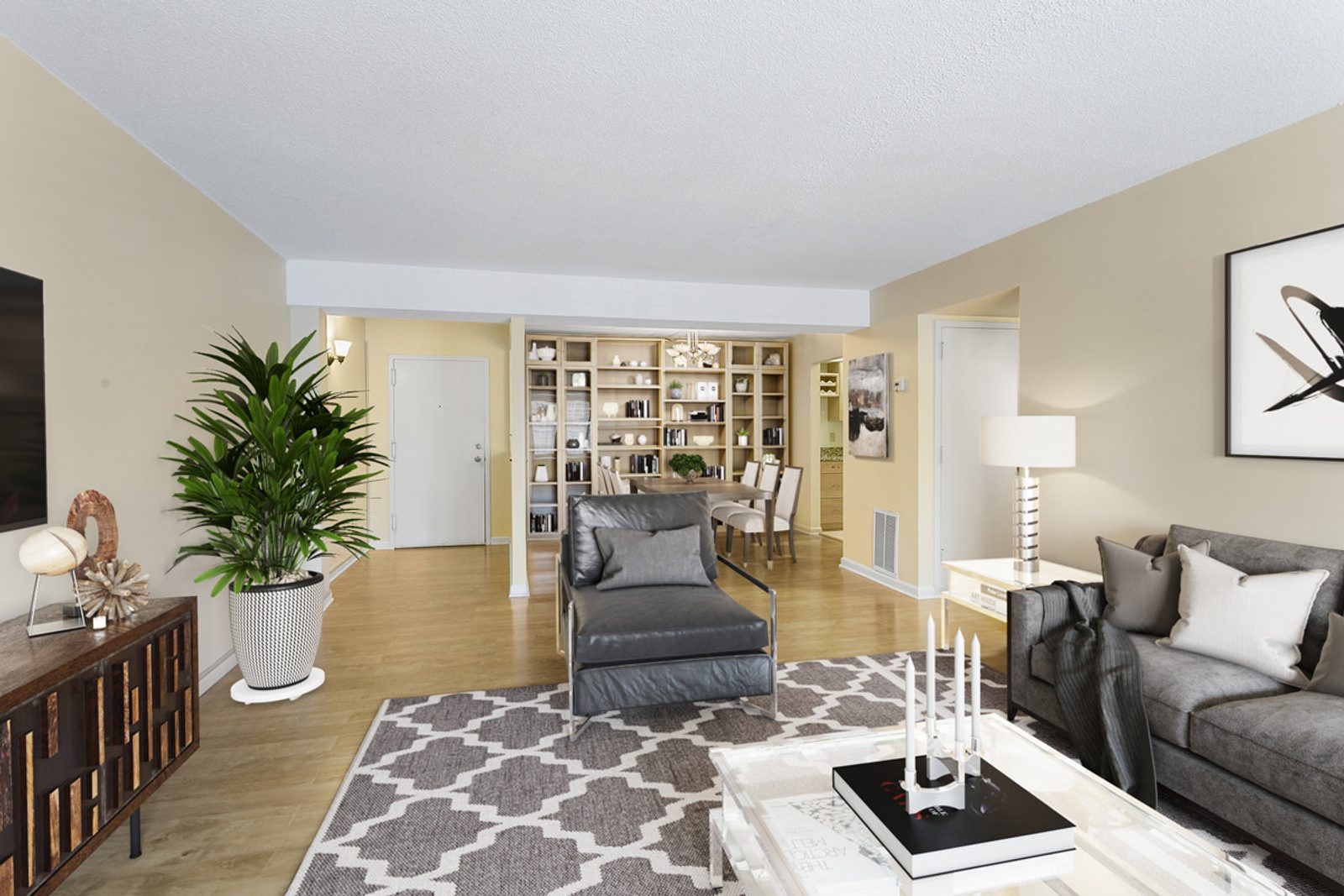
Introduction
When preparing a property for sale, staging is one of the most effective investments you can make. Staged homes consistently sell faster and for higher prices than unstaged ones — the National Association of Realtors has reported this pattern year after year. But choosing between virtual staging and traditional staging often comes down to one question: what does each option actually cost?
The answer matters because staging costs come out of the seller's pocket or the agent's marketing budget before any return is realized. Spending too much eats into profit. Spending too little can produce staging that fails to move buyers.
This guide breaks down the full cost picture for both approaches in 2026 — not just the headline numbers, but the hidden costs, the variable factors, and the ROI equation that determines which option makes financial sense for your listing.
Traditional Home Staging Costs in 2026
Traditional staging involves physically furnishing and decorating a property. The costs fall into several categories.
Initial Consultation and Design Fee
Most staging companies charge a consultation fee to visit the property, take measurements, and develop a staging plan.
- Typical range: $150–$500
- What it covers: Property walkthrough, room-by-room plan, furniture selection, styling direction
- Some companies waive this fee if you proceed with full staging
Furniture Rental
This is the largest cost component. Furniture is rented by the piece or as room packages.
- Living room: $500–$1,500/month
- Primary bedroom: $400–$1,200/month
- Dining room: $300–$800/month
- Kitchen accessorizing: $150–$400/month
- Secondary bedrooms: $200–$500/month each
- Home office: $200–$600/month
For a typical three-bedroom home with living, dining, and primary bedroom staged, expect to pay $1,500–$4,000 per month in furniture rental alone.
Delivery, Setup, and Removal
Moving furniture in and out adds meaningful cost.
- Delivery and setup: $300–$800 (depends on property access and furniture volume)
- Monthly maintenance: $100–$300 (dusting, adjusting, replacing wilted plants or damaged items)
- Removal/de-staging: $300–$800
Total Traditional Staging Cost Example
For a standard 3-bedroom, 2-bath home staged for two months:
| Cost Category | Estimated Cost |
|---|---|
| Consultation | $300 |
| Furniture rental (2 months) | $5,000 |
| Delivery and setup | $500 |
| Maintenance (2 months) | $400 |
| Removal | $500 |
| Total | $6,700 |
This is a mid-range estimate. Luxury properties can easily reach $15,000–$25,000 for a two-month staging. Smaller condos might land around $2,500–$4,000.
Virtual Staging Costs in 2026
Virtual staging is done digitally — furniture and decor are added to photographs of empty rooms using professional software. The cost structure is simpler.
Per-Image Pricing
Most virtual staging providers charge per staged image.
- Standard virtual staging: $25–$50 per image
- Premium/luxury staging: $50–$80 per image (more detailed, custom furniture, multiple revisions)
- Virtual renovation (wall color, flooring changes): $30–$60 per image
Typical Image Count Per Listing
Most listings benefit from 5–10 virtually staged images, covering the key rooms that influence buyer decisions:
- Living room: 1–2 images
- Primary bedroom: 1–2 images
- Dining area: 1 image
- Secondary living spaces or problem rooms: 1–3 images
Total Virtual Staging Cost Example
For the same 3-bedroom home with 8 staged images:
| Cost Category | Estimated Cost |
|---|---|
| 8 virtually staged images at $35/image | $280 |
| Optional rush delivery | $50 |
| Total | $330 |
Even with premium staging at $60/image for 10 images, the total reaches only $600 — roughly 5–9% of the cost of traditional staging.
No Recurring Costs
Unlike traditional staging, virtual staging has no monthly fees. Once the images are delivered, you own them. There is no furniture to return, no maintenance, and no removal charge. If the property stays on the market for six months, the virtual staging cost does not increase.
Side-by-Side Cost Comparison
| Factor | Traditional Staging | Virtual Staging |
|---|---|---|
| Upfront cost | $1,500–$4,000+ | $200–$600 |
| Monthly recurring cost | $1,500–$4,000 | $0 |
| Setup/removal cost | $600–$1,600 | $0 |
| Total for 2-month listing | $4,500–$10,000+ | $200–$600 |
| Total for 6-month listing | $10,500–$26,000+ | $200–$600 |
| Per-room flexibility | Full house required for best rate | Stage only the rooms that matter |
Hidden Costs to Watch For
Traditional Staging Hidden Costs
- Damage fees: If furniture is damaged during the staging period, you pay for repairs or replacement
- Minimum rental periods: Many staging companies require a 2–3 month minimum, even if the home sells in two weeks
- Utility costs: Staged homes need climate control and lighting during showings, which adds to carrying costs
- Insurance: Some staging contracts require additional liability coverage
- Seller displacement: If the seller is still living in the home, staging may require them to relocate temporarily or live in a partially staged space
Virtual Staging Hidden Costs
- Low-quality source photos: If the original photos are poor, virtual staging results will be poor. You may need to invest in professional photography first
- Disclosure compliance: Some MLS platforms require specific labeling. Budget time to ensure compliance
- Buyer expectation gap: Buyers who visit a vacant property after seeing staged photos need clear communication — this is a process cost, not a financial one, but worth accounting for
ROI Comparison: Which Delivers Better Returns?
The financial case for virtual staging is strongest when you look at the return on investment.
Traditional staging ROI:
- Cost: $5,000–$10,000 for a typical listing
- Potential benefit: Staged homes sell for 1–10% more and 30–70% faster
- On a $400,000 home, a 3% price improvement is $12,000 — a strong return even after staging costs
- Break-even point: The home only needs to sell for about 1–3% more to cover staging costs
Virtual staging ROI:
- Cost: $200–$600 per listing
- Potential benefit: Professionally presented homes get more online views, more inquiries, and faster showings. NAR data shows staged homes — physically or virtually — outperform unstaged ones on key metrics
- On a $400,000 home, the staging cost represents 0.05–0.15% of the sale price
- Break-even point: Virtual staging pays for itself with even a marginal improvement in days-on-market or offer quality
The math favors virtual staging for most listings at or below the median price point, where traditional staging costs consume a larger percentage of potential profit. For luxury listings where the in-person experience drives the sale, traditional staging may still be the stronger investment.
When to Choose Each Option Based on Budget
Choose Virtual Staging When:
- The listing price is under $500,000 and staging costs would eat into seller proceeds
- The property is vacant and needs online presentation only
- You need staging completed in under 72 hours
- You are staging multiple properties simultaneously (investors, builders)
- The property is in a remote area with limited access to staging companies
Choose Traditional Staging When:
- The property is in the luxury segment ($1M+) where buyer expectations include furnished showings
- You expect heavy open house traffic and the in-person experience is central to the sale
- The property has challenging spatial issues that are better understood in person
- The seller has the budget and prefers a turnkey solution
For a deeper comparison of the two approaches beyond just cost, see Virtual Staging vs. Home Staging: Which is Right for You?.
Conclusion
Virtual staging costs 90–95% less than traditional staging while delivering the online visual impact that drives the majority of buyer interest in 2026. For most listings, the cost comparison alone makes a compelling case. Traditional staging still has its place — particularly in luxury markets where the full sensory experience justifies the investment — but for the typical agent managing multiple listings at varied price points, virtual staging offers professional-quality presentation at a fraction of the cost.
If you are ready to stage your next listing, Digihomestudio.com provides professional virtual staging starting at $29 per image with standard 24–48 hour turnaround. Contact us for a sample edit on your own property photos.
FAQ: Virtual Staging vs Traditional Staging Cost
How much cheaper is virtual staging than traditional staging?
Virtual staging typically costs 90–95% less. A full virtual staging package for a standard home runs $200–$600, while traditional staging for the same property costs $4,500–$10,000+ over a two-month listing period.
Are there any recurring costs with virtual staging?
No. Virtual staging is a one-time cost per image. There are no monthly rental fees, maintenance charges, or removal costs.
Does virtual staging help sell a home for more money?
Virtual staging improves online presentation and buyer engagement, which supports faster sales and stronger offers. While it does not replace the in-person experience of traditional staging, the dramatically lower cost means the ROI threshold is much easier to clear.
Can I stage only some rooms with traditional staging?
Yes, but most staging companies charge higher per-room rates for partial staging than for whole-home packages. Virtual staging has no such constraint — you pay only for the rooms you need staged.